
How We Actually Use AI in Our CGI Production Workflow

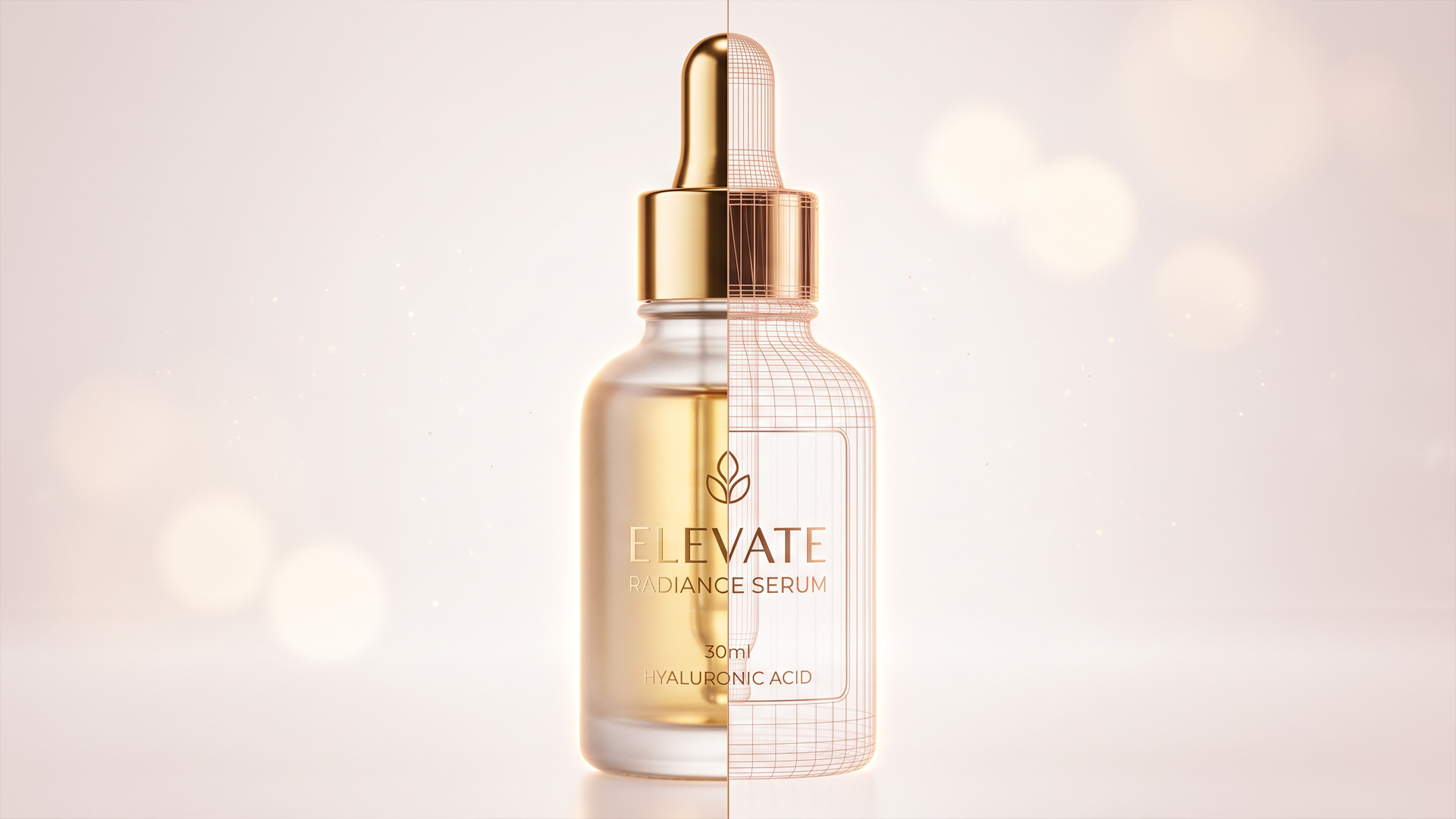
There’s a version of this article I could write where I tell you AI has transformed everything and the future is fully automated and your next brand campaign can be produced in an afternoon for a fraction of the cost.
I’m not going to write that article, because it’s not true.
Here’s what is true: AI tools have genuinely changed how we work at Squirrel Studio. Some of them have made us faster. Some have opened up creative possibilities we didn’t have before. And some of them are impressive in demos but fall apart the moment you give them a real client brief with real constraints.
I want to talk about all three.
The Part That Actually Saves Time
Let’s start with image generation — specifically for pre-visualization and concept development.
Before a CGI production goes into full 3D development, there’s a phase where we’re figuring out the visual direction. What’s the lighting mood? What’s the background treatment? What’s the product’s hero angle going to feel like? Traditionally, this meant doing rough renders, mood boards from reference images, and a lot of back-and-forth before anyone committed to a direction.
Now we use tools like Nano Banana Pro for this phase. We can generate photorealistic concept frames in minutes — not to replace the final 3D production, but to give clients something concrete to react to before we’ve spent hours in a scene. It compresses the approval process significantly.
The key word there is pre-visualization. These aren’t the final assets. They’re a faster way to align on direction before the real work begins.
Where AI Video Has Become Genuinely Useful
This one is newer and still evolving fast, but it’s worth talking about honestly.
We’ve been using tools like Seedance and Kling 3 to add motion to CGI frames — product reveals, liquid dynamics, atmospheric movement. And in the right context, they’re remarkable.
The use case we keep coming back to is this: you have a perfect hero render. Stunning image. Client loves it. But the brief calls for video, not stills. Instead of rebuilding the entire scene in a full 3D animation pipeline (which adds significant time and cost), we can use AI video generation to bring that frame to life in a way that, for certain types of content, is indistinguishable from a full CG production.
For social content, product reveals, reel-length campaigns — this workflow is legitimately competitive with traditional 3D animation in terms of output quality, and it’s faster.
Where it breaks down: anything requiring precise, predictable motion that has to match a pre-approved animatic. If a client has a very specific sequence they need hit exactly — product rotates 45 degrees, then X happens, then Y — AI video tools can’t reliably deliver that yet. You’re working with probabilities, not keyframes. For that kind of control, traditional 3D animation is still the right tool.
What We Would Never Use AI For
The foundation of a CGI production — 3D modeling, texturing, lighting, the scene build — we don’t hand that to AI, and here’s why.
AI image generation works by predicting what a plausible output looks like based on training data. For generic product shots, it can do surprisingly well. But the moment you introduce a real, specific product with exact dimensions, pantone-accurate colors, legally correct packaging text, and brand-mandated visual guidelines — AI image generation falls apart.
A bottle of Almarai juice is not a generic juice bottle. The label has a specific structure. The proportions matter. The color is specific. A client like that doesn’t want something that looks like their product. They want their product, rendered to a standard accurate enough to run in a national campaign.
That accuracy only comes from proper 3D modeling and rendering. It’s a craft process, not a generation process. AI doesn’t replace it — it wraps around it.
The Workflow We’ve Actually Settled On
After experimenting with different approaches over the past couple of years, here’s roughly how our productions run now:
Concept phase: AI-assisted image generation for rapid pre-viz and direction approval. Fast, collaborative, keeps clients engaged without burning production time on directions that won’t land.
Production phase: Full 3D development in Cinema 4D and 3ds Max. Accurate modeling, brand-compliant texturing, proper lighting built for output flexibility. This is the part that requires human craft and technical skill, and it’s where the quality actually comes from.
Motion phase: Depending on the brief — traditional 3D animation for precise sequences, AI video generation for atmospheric or editorial motion where the output just needs to feel alive rather than hit exact marks.
Output phase: AI-assisted upscaling and enhancement where relevant. Faster than traditional workflows, same quality floor.
The result is a production pipeline that’s faster than pure traditional methods, but with a quality ceiling that’s actually higher than pure AI generation — because the structural core of the work is still done properly.
Why We’re Telling You This
Transparency matters in this industry right now because there’s a lot of noise.
Some studios are presenting fully AI-generated work as CGI production without disclosing it. Some agencies are being sold AI output as premium-level 3D work. And brands are sometimes making decisions about visual production based on demo videos that don’t reflect what actually gets delivered.
We think clients deserve to know what they’re getting. When we use AI tools, we use them to make the work better or faster — not to shortcut the things that actually determine quality.
The 3D scene is still built. The product is still accurately modeled. The lighting is still crafted by someone who knows what they’re doing. AI is a tool in that process, not a replacement for it.
If you ask us whether we use AI: yes, where it helps. If you ask us whether AI is doing the work: no. We are.
Squirrel Studio is a CGI and 3D production studio based in Cairo, Egypt, working with FMCG and F&B brands across Egypt and the GCC. If you want to understand what the right production approach looks like for your brief, let’s talk.
