
The Hidden Costs of Traditional Product Photography

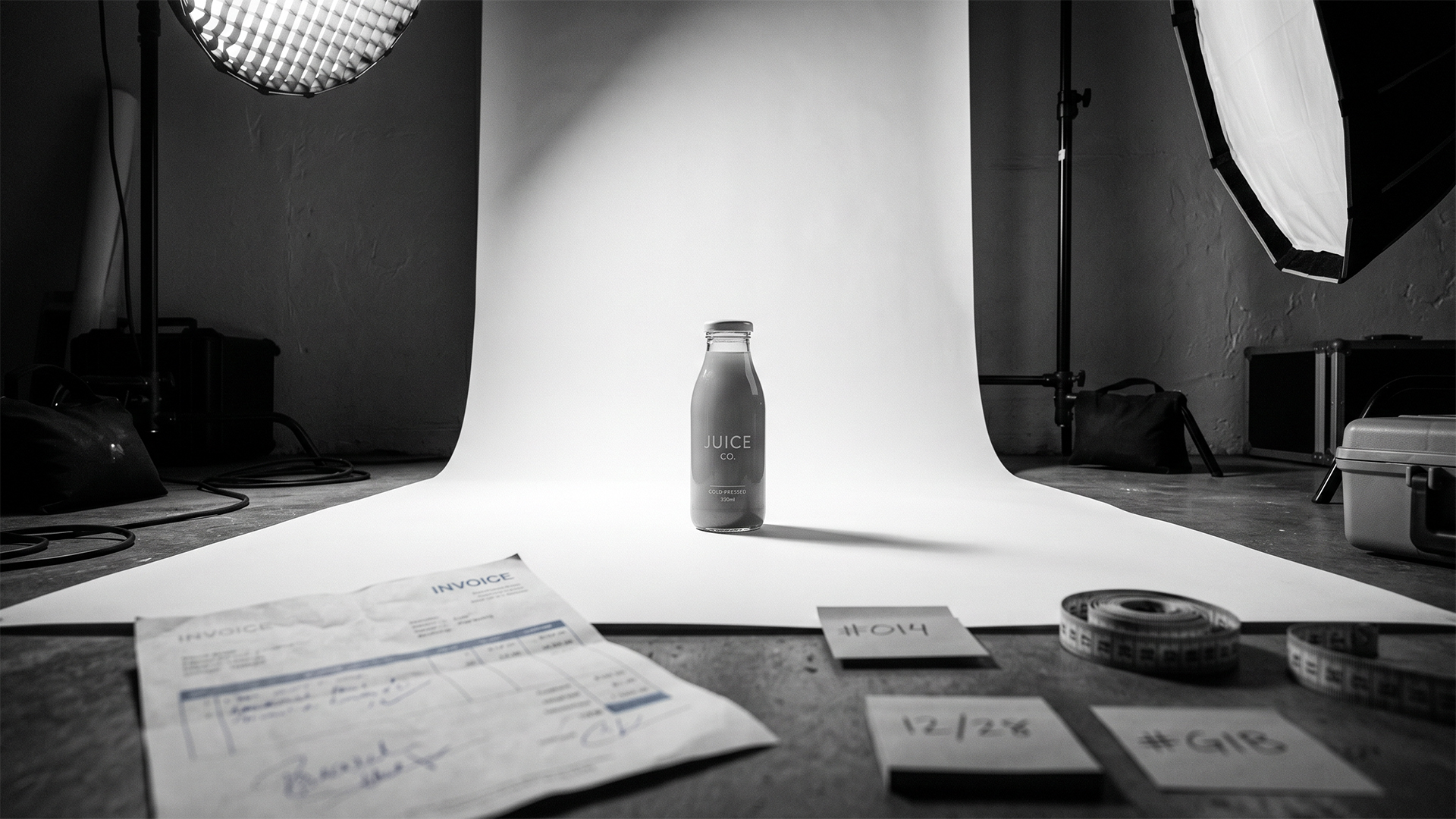
There’s a conversation I’ve had with brand managers more times than I can count. It usually starts the same way:
“CGI sounds interesting, but it’s expensive. We already have a photographer we work with, and the shoot costs X. Can you match that?”
And I get it. On paper, the comparison looks simple. A photographer quotes you a day rate plus studio hire. You see a number, you understand it, it feels familiar. CGI feels like the unknown — a black box with a price tag you’re not sure how to evaluate.
But here’s the thing: that photographer’s quote is only the beginning of what you’ll actually spend.
The Quote Is Never the Final Number
Traditional product photography has a way of growing costs after the shoot is done. Not because anyone is being dishonest — it’s just the nature of the process.
The reshoot problem. You brief the photographer, they shoot, you get the images back and… the packaging color is slightly off under the studio lighting. Or the angle doesn’t work for the campaign layout your designer already built. Or the client sees it and wants the product tilted differently. Now you’re booking another shoot. Another day rate. Another round of logistics.
In CGI, a “reshoot” costs almost nothing. The 3D scene is already built. You change the camera angle, adjust the lighting, rotate the product — it’s done in hours, not days.
Logistics that add up quietly. For a single traditional shoot, you’re often coordinating:
- Shipping physical products to a studio (sometimes across cities or countries)
- Making sure the samples aren’t damaged in transit
- Hiring a stylist or food stylist if it’s a food product
- Studio hire, equipment rental, assistant fees
- Post-production and retouching separately
None of these line items are surprising on their own. But together? The final invoice rarely looks like the original quote.
The revision trap. Client wants a version with a white background. And one on black. And one showing the product from the front instead of at an angle. With traditional photography, each variation can mean setting up again. With CGI, variations are built into the workflow from the start.
The Version Problem Is Real, Especially in FMCG
If you work in FMCG, you know the drill. One product, multiple SKUs. Multiple markets with different packaging text. Campaign visuals that need to work across a 6-sheet billboard, a social media post, a website banner, and a point-of-sale display — all at different sizes and ratios.
Traditional photography was not designed for this. You shoot once, and then you spend weeks in post trying to adapt a fixed image to ten different applications. Sometimes it works. Sometimes it doesn’t, and you’re back to the studio.
CGI scenes are modular. The product, the environment, the lighting — they’re all separate layers you can recombine. You build it once, you output it in whatever format, ratio, or configuration the campaign needs. That flexibility has real monetary value that almost never shows up in the initial cost comparison.
What You’re Actually Paying For in Both
I’m not saying traditional photography is always the wrong choice. There are situations where it makes complete sense — lifestyle shots with real people, certain textures that are genuinely hard to replicate in 3D, very fast turnaround needs with simple requirements.
But when brands say “photography is cheaper,” they’re usually comparing:
- Photography: Day rate + studio + stylist + retouching
- CGI: Full production quote
And then they’re not accounting for:
- Photography (real total): The above + reshoots + additional variations + time spent coordinating logistics + delays in the supply chain when physical samples aren’t ready
- CGI (real total): The production quote. Full stop.
The assets you get from a CGI production are also different in nature. A 3D scene is a reusable asset. Next season, when the packaging changes slightly, you update the file — you don’t start over. The accumulated value compounds over time in a way a photograph simply can’t.
The One Cost People Forget Most
Time.
Not just the time the shoot takes, but the total calendar time from brief to final delivered assets.
For a traditional shoot: you brief, you book a studio, you wait for available dates, you organize samples, you shoot, you wait for edited images, you review, you request changes, you wait again.
For CGI: you brief, modeling begins immediately, you review in-progress renders, you iterate digitally, you deliver.
For campaign-driven brands where the launch date is fixed and unmovable, the speed difference alone changes the economics. How much does it cost your brand to miss a launch window because the photography wasn’t ready?
A More Honest Comparison
I’m not writing this to tell you CGI is always cheaper. Sometimes it’s not — particularly for one-off, simple products where no variations are needed and the brief is crystal clear.
What I’m saying is that the comparison is almost always done wrong. People compare the CGI quote to the photography day rate, not to the total cost of the photography project including everything that comes after the shoot.
When brands we work with at Squirrel Studio do an honest accounting of what they actually spent on their last traditional product shoot — from kick-off brief to final approved assets — the gap between that and a CGI production becomes a lot smaller than they expected. Sometimes CGI is cheaper. Often it’s comparable. And it almost always comes with more flexibility, faster iteration, and assets that remain useful for longer.
The hidden costs of traditional photography aren’t hidden because anyone is trying to obscure them. They’re hidden because no one goes back and adds them all up.
Maybe it’s time to start.
At Squirrel Studio, we specialize in CGI product visualization and food CGI for FMCG and F&B brands across Egypt and the GCC. If you’re trying to figure out what the right approach is for your next campaign, we’re happy to talk.
