
Why Your Product Visuals Are Losing You Sales (And How to Fix It)

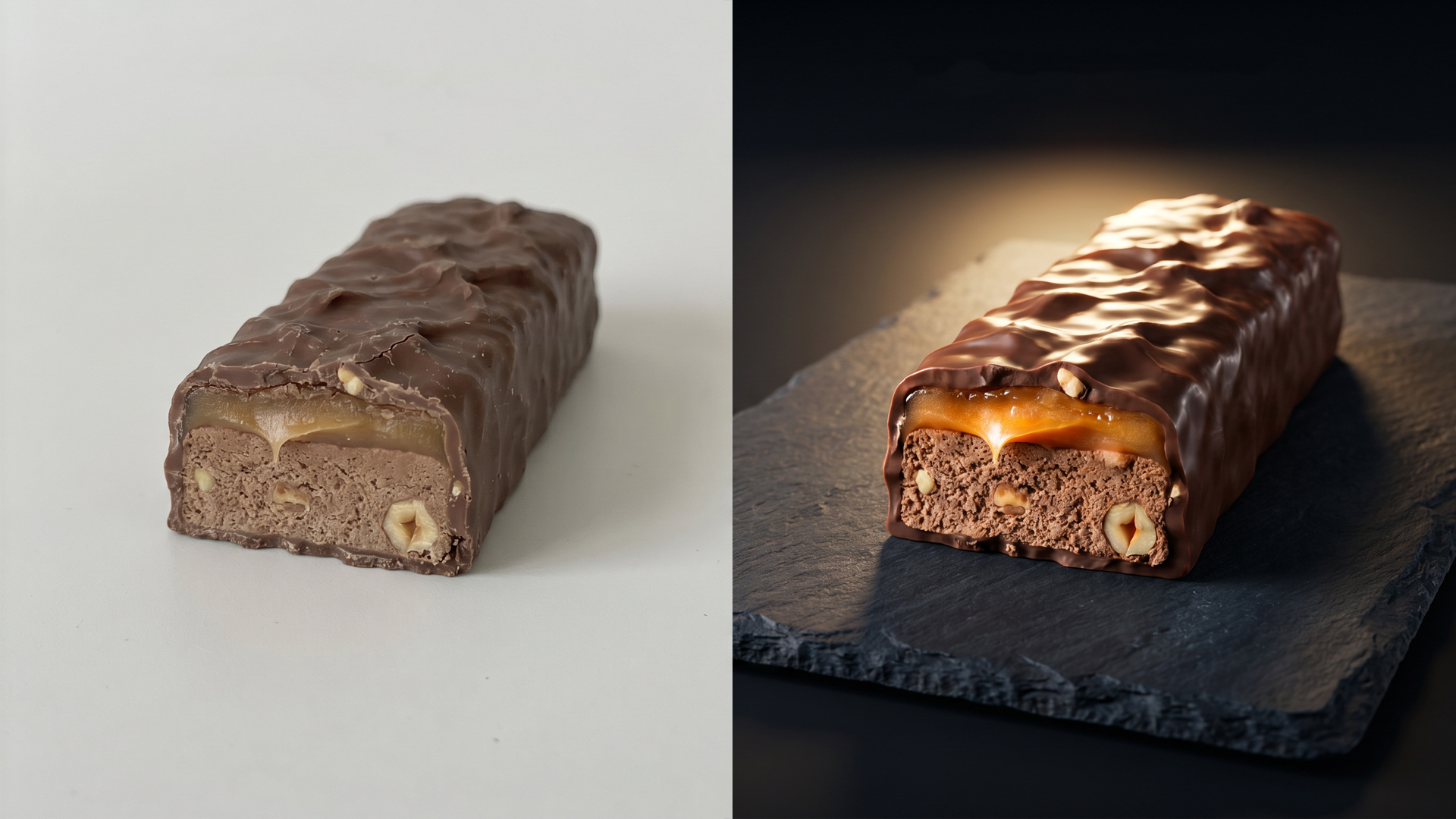
No one wants to hear this, but someone has to say it.
If your product looks worse in its marketing visuals than it does in real life, you are leaving money on the table. Every day. On every platform where that image appears.
This isn’t about having a big production budget. It’s about understanding what your visuals are actually doing — and what they’re failing to do.
The Job Your Product Visual Has to Do
When a consumer sees your product in a digital context — on a shelf on an e-commerce platform, in a social media ad, on a website banner — that visual is doing work that used to be done by physical experience.
In a physical store, a customer could pick up your product. Feel the weight of it. See how the light catches the packaging. Read the label at their own pace. The product itself was the salesperson.
Online, you get an image. One image, sometimes a few. And that image has to do everything a physical interaction used to do — build trust, communicate quality, create desire, and answer the question “is this worth my money?” — in about two seconds.
Most product visuals are not doing that job. And the brands that understand this are the ones winning on shelf, in feeds, and in conversion rates.
The Problems We See Most Often
1. The image is technically fine but completely forgettable.
It’s in focus. It’s well-lit. The product is centered. And absolutely nothing about it makes you stop scrolling.
This is the most common issue, and it’s the hardest one for brands to see because technically, nothing is wrong. But in a feed full of competing content, “technically fine” is invisible. A consumer doesn’t stop to think “this is a well-composed photograph.” They either feel something when they see it, or they don’t. If they don’t, they’re gone.
2. The visual doesn’t communicate what makes the product worth buying.
A juice bottle is in the shot. Great. But does the image make you feel the coldness of it? Does it communicate freshness? Does it make you want to drink it right now?
These aren’t accidents that happen during a shoot — they’re intentional decisions made during production. What’s the liquid doing? Is there condensation? Is the light hitting it in a way that makes it look premium? Is the background contributing to the feeling or just existing?
Product visuals that sell aren’t just documenting the product. They’re arguing for it.
3. The quality signals don’t match the price point.
This one is particularly costly. If your product sits in a premium or mid-premium price segment, your visuals need to be communicating that positioning every time someone sees them. If they look like they were produced cheaply, you’ve undermined the entire price justification before the consumer even reads the pack.
People don’t consciously think “these visuals look low-quality therefore I don’t trust this brand.” They just don’t buy. The visual is doing the damage invisibly.
4. Every SKU looks different because they were shot at different times.
If you’ve been in the market for a few years, you’ve probably had multiple rounds of shoots across multiple photographers or studios. The result is a product range where every item has slightly different lighting, slightly different color grading, slightly different backgrounds.
On a shelf — physical or digital — that incoherence reads as a brand that doesn’t have its identity together. Consumers notice, even if they can’t articulate why.
What Good Product Visuals Actually Do
When product visuals are doing their job properly, a few things happen:
They establish category leadership. In any product category, the brand with the most sophisticated visuals is perceived as the most premium player — regardless of whether the actual product formulation is any different. Visual quality is a proxy for product quality in the consumer’s mind.
They give you flexibility across formats. A well-produced visual works on a billboard, a social media square, a website banner, and a POS display without losing integrity. Poorly produced visuals get stretched, cropped, and compromised every time you try to use them somewhere new.
They hold up over time. Good CGI assets in particular have a shelf life that traditional photography often doesn’t. The scene is reusable. Packaging updates don’t require a reshoot. You adapt and extend rather than starting over.
The Honest Question to Ask Yourself
Pull up your product’s hero visual right now. The one that’s on your website, or running in your current campaign.
Then pull up the visual of your main competitor’s product.
Look at them side by side, as a consumer would — not as someone who works in your brand. Which one looks more worth buying?
If the answer isn’t immediately yours, you already know what needs to change.
This Isn’t About Spending More Money
I want to be clear about something: this is not an argument for spending more money on production for its own sake. Bigger budgets don’t automatically produce better visuals.
What produces better visuals is clarity about what the image needs to do, paired with a production approach that’s designed to do it.
Some of the weakest product visuals we’ve encountered came from expensive shoots that had no real brief — just “make it look nice.” Some of the strongest came from tightly briefed productions where everyone in the process understood exactly what feeling needed to land and what information needed to be communicated.
The question isn’t how much you’re spending. It’s whether what you’re producing is actually doing the job.
Where to Start
If you’re reading this and recognizing your own brand in some of what I’ve described, the starting point is simpler than you might think.
Pick one product. Your hero SKU — the one that represents your brand most visibly. Get one image produced to the standard it deserves. Not all of them at once. Just one.
See what happens to how people engage with it. See whether the conversion rate changes. See whether the comments on social posts shift in tone.
Then you’ll know what your visuals have been costing you.
Squirrel Studio produces CGI product visuals and food CGI for FMCG and F&B brands in Egypt and the GCC. If you want to talk about what your product visuals could be doing better, start here.
