
What Is Product CGI, and Why Are FMCG Brands Switching to it?

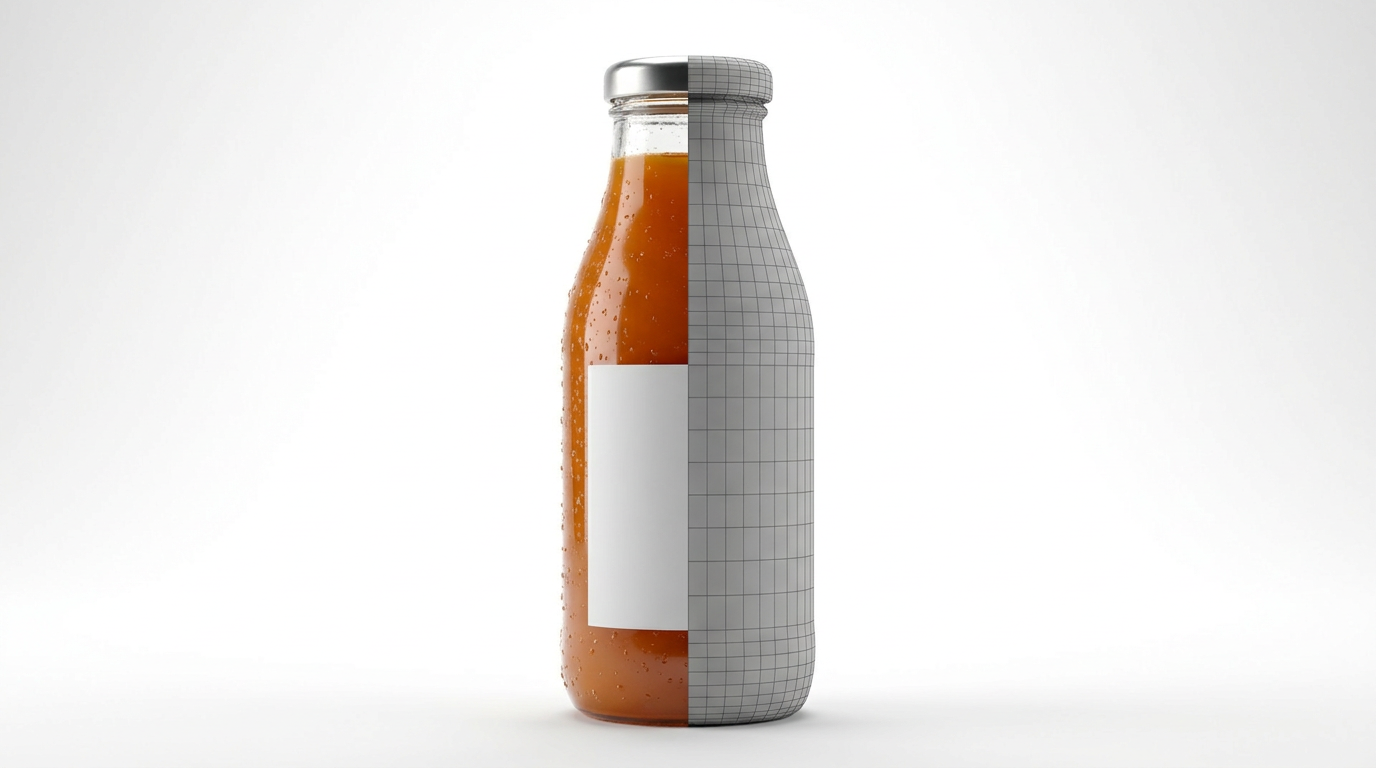
Walk into any supermarket in Cairo, Dubai, or Riyadh and look closely at the products on the shelf. The juice bottle with light wrapping perfectly around the glass. The ice cream that somehow looks colder than ice cream has any right to look. The chocolate bar catching a glint of light on every single ridge.
There’s a good chance none of that was photographed.
It was built — pixel by pixel, in 3D software, by an artist who never touched the actual product.
This is product CGI, and it’s quietly become one of the most important shifts in how FMCG brands create marketing visuals. If you work in marketing, brand management, or e-commerce and haven’t looked into it yet, this is the article that catches you up.
What Is Product CGI?
CGI stands for Computer-Generated Imagery. In product marketing, it means building a photorealistic image or video of a product entirely inside 3D software — no camera, no studio, no physical shoot involved.
Here’s the basic workflow: a 3D artist creates a digital model of the product based on its real dimensions and design files. They apply materials that mimic how light interacts with the actual surfaces — glass, foil, plastic, liquid. They build a scene around it, light it the way a photographer would light a studio set, and render the final image.
Done well, the output is indistinguishable from a photograph. Often, it looks better — because every variable is under total control.
This isn’t experimental technology. CGI has powered Hollywood blockbusters for thirty years. What’s new is that the tools have become accessible enough for commercial studios to use them on everyday marketing work: packshots, social content, TVC key frames, e-commerce hero images, and full campaign visuals.
Why Brands Are Moving Away From Pure Photography
Traditional product photography isn’t going away, and it shouldn’t. But it carries limitations that get more expensive the bigger and faster your brand moves.
The product has to physically exist
You can’t photograph a product that hasn’t been manufactured. That means marketing teams are stuck waiting on production timelines before they can shoot a single image — often compressing launch windows into a stressful scramble. With CGI, a campaign can be built from packaging design files months before the first unit comes off the line.
Every change means another shoot
Want the same hero shot with a different background, season, or mood? In photography, that’s a new set, new lighting, sometimes a new location. In CGI, it’s the same 3D file rendered again — a few hours of work, not a full production day.
Liquids, ice, and condensation are brutal to shoot
Ask any product photographer about getting a “perfect” splash of juice or a frosty bottle with just the right amount of condensation. It can take an entire day, specialized rigs, and a fair amount of luck. In 3D, these are physics simulations — and you keep adjusting until they’re exactly right, every time.
Scaling a campaign gets expensive fast
Need the same shot across six SKU colors, three markets, and four aspect ratios? That’s potentially dozens of individual photoshoots. With one well-built 3D model, it’s a render queue.
What This Means Specifically for FMCG Brands
FMCG marketing runs on speed, volume, and consistency — three things photography struggles to deliver at scale.
Faster time to market. A CGI packshot can be delivered while the product is still in pre-launch, instead of after it ships. That alone can shave weeks off a campaign timeline.
Regional consistency without reshoots. A single 3D asset can be adapted for Egypt, Saudi Arabia, and the UAE — different copy, different backgrounds, different formats — without ever touching a camera again. The brand’s visual identity stays locked across every market.
Creative freedom with zero physical limits. Want your product suspended mid-splash, floating in zero gravity, or lit by a sunset that doesn’t exist in nature? CGI doesn’t ask if it’s physically possible. It asks how much detail you want.
Better long-term economics. The upfront cost of a high-quality 3D model is an investment, not an expense — because that same model can be re-rendered for new campaigns, new markets, and new formats for years.
“But Does It Actually Look Real?”
This is the question every brand asks before trying CGI for the first time, and it’s a fair one.
The honest answer: when it’s done well, CGI doesn’t just look real — it looks like the best possible version of real. Lighting can be dialed in with total precision. Materials reflect exactly the way they should. Liquid behaves exactly the way it should. Nothing is left to chance, weather, or a bad take.
But “done well” is the operative phrase. The gap between CGI that looks stunning and CGI that looks slightly off comes down to craft — accurate materials, correct lighting physics, and an art director who understands how real-world surfaces behave.
At Squirrel Studio, that’s where every project starts. Matte plastic doesn’t reflect light the way glass does. A foil pouch behaves nothing like a paper label. Getting those material properties right is the difference between CGI that’s merely impressive and CGI that’s genuinely convincing — the kind that makes a viewer forget they’re looking at a render at all.
So Is CGI Replacing Photography?
Not entirely — and that’s not really the right question to ask.
The better question is: which tool fits which job?
Photography still wins for content that needs authentic human emotion, real-world texture, or a raw, unpolished feel — think lifestyle shoots, influencer content, behind-the-scenes social posts.
But for hero packshots, key visuals, animated product films, and anything that needs to scale across markets or formats, CGI has become the default for brands that prioritize quality, consistency, and speed.
The brands pulling ahead right now aren’t picking a side. They’re using both tools deliberately, choosing whichever one actually serves the shot they need.
The Bottom Line
If you’re managing marketing or brand visuals for an FMCG product and haven’t seriously evaluated what CGI could do for your production pipeline, now is the moment to start.
The technology has matured. Skilled studios are accessible. Costs have dropped significantly compared to even three years ago. And the output — when built by people who understand both the craft and the commercial brief — is production-ready, brand-consistent, and built to scale.
The real question isn’t whether CGI looks good enough. It’s whether your competitors have already started using it.
Squirrel Studio is a Cairo-based CGI and visual production studio working with FMCG and F&B brands across Egypt and the GCC. Want to see what product CGI could look like for your brand? Get in touch.
